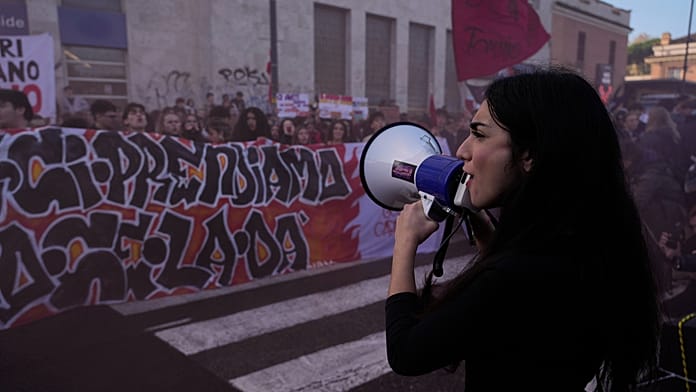
Tens of thousands of young people took to the streets across Europe on Friday in a coordinated day of action spanning more than 25 countries, from Britain and Germany to Spain, Italy and Croatia.
Organizers called it an international youth strike, with demands ranging from more funding for schools and universities to higher wages, more spending on public services and action on the climate crisis. Many protesters also opposed rising military budgets and conscription, carrying banners reading “Money for schools, not war” and waving Palestinian flags.
The marches were largely peaceful and, outside France, more muted than the demonstrations that have shaken Paris in recent weeks. In Italy the protests were the widest, targeting Prime Minister Giorgia Meloni’s economic policies and drawing tens of thousands of marchers, according to Italy’s largest trade union, the CGIL. Its leader, Maurizio Landini, said the demand for change was growing across Europe and among ordinary people.
In Berlin, around 4,000 people gathered in Alexanderplatz, while thousands more marched in Cologne, where the German campaign group “Gen Z regelt” said it was organizing protests in 73 cities and towns. In London, hundreds gathered in Parliament Square, and students from more than 350 schools, colleges and universities across Britain were expected to walk out. Organizers said the demonstrations would continue through the weekend.